
Welcoming Week 2026 brought refugees, newcomers, local residents and service providers together in Vaughan to celebrate belonging, strengthen connections and experience Ubuntu in action.
On Saturday, September 12, 2026, Hope for Refugees International (HRI) brought community members together in Vaughan for the Ubuntu Welcoming Circle: Healing, Culture and Community Connection, a special gathering held as part of Welcoming Week 2026.
It was an afternoon filled with culture, conversation, music, wellness, creativity, food, laughter and new connections. From the collective affirmations and restorative wellness activities to the cultural performances, Community Resource Hub, participatory Fireside Dialogue, Ubuntu Connection Bingo and shared meal, the spirit of Ubuntu could be felt throughout the gathering.
Rooted in the African philosophy of Ubuntu — “I am because we are” — the event was created to foster a sense of belonging, strengthen connections, celebrate the cultures, contributions and resilience of newcomers, and build bridges between newcomers and the broader community.
And throughout the afternoon, that vision came alive.
Creating a Space Where People Could Belong
For refugees and newcomers, settlement is about much more than finding housing, employment or learning how to navigate a new system. It is also about finding community, rebuilding social connections, feeling seen and valued, and eventually being able to say: I belong here.
The Ubuntu Welcoming Circle brought together African and Caribbean refugees and newcomers, including LGBTQI+ newcomers and people with experiences of gender-based violence and displacement, alongside local residents, settlement and social service providers, community organizations, artists, volunteers and other community members.
Rather than separating culture, wellness and settlement support into different spaces, the gathering intentionally brought them together.
Participants could enjoy a cultural performance, take part in a restorative wellness activity, create art, learn about community services, have a conversation with someone they had never met before, participate in dialogue about the barriers newcomers face, share food and, of course, dance.
It was informative, but it was also joyful.
It was reflective, but it was also celebratory.
Most importantly, it was community.
Culture as a Source of Joy, Identity and Connection
Music and cultural expression were an important part of the gathering.
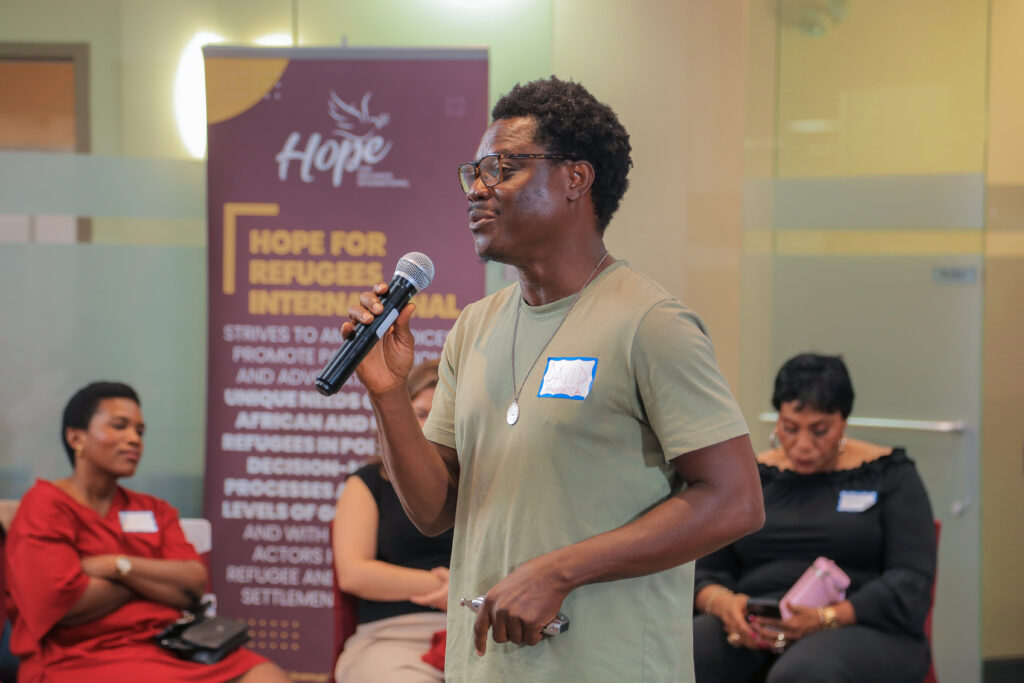
David Harmonica captivated participants with a beautiful musical performance combining live harmonica, vocals, background music and storytelling. His soothing and lyrical performance gave many participants an opportunity to experience the harmonica in a unique and intimate way.
A versatile musician and music educator, David is the Founder and CEO of Harmonics Music Academy and performs and teaches across several instruments, including harmonica, piano, guitar and vocals.
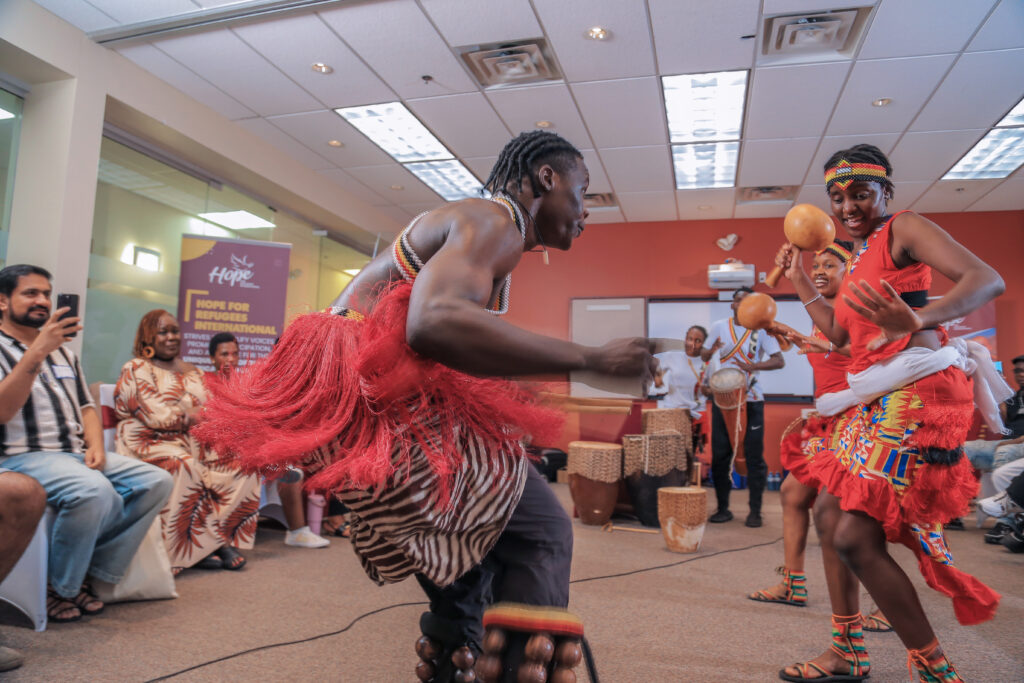
The Neema Child Project Choir brought another kind of energy into the room through an engaging traditional African dance and drumming performance.
The rhythms, movement, colourful cultural expression and energy of the performers transformed the space. Participants were not simply watching a performance—they were responding, moving, celebrating and connecting.
It was a beautiful reminder that cultural expression can help newcomers preserve identity while simultaneously creating bridges with people from different backgrounds.
Making Space for Rest, Wellness and Collective Care
Wellness was woven intentionally into the event.
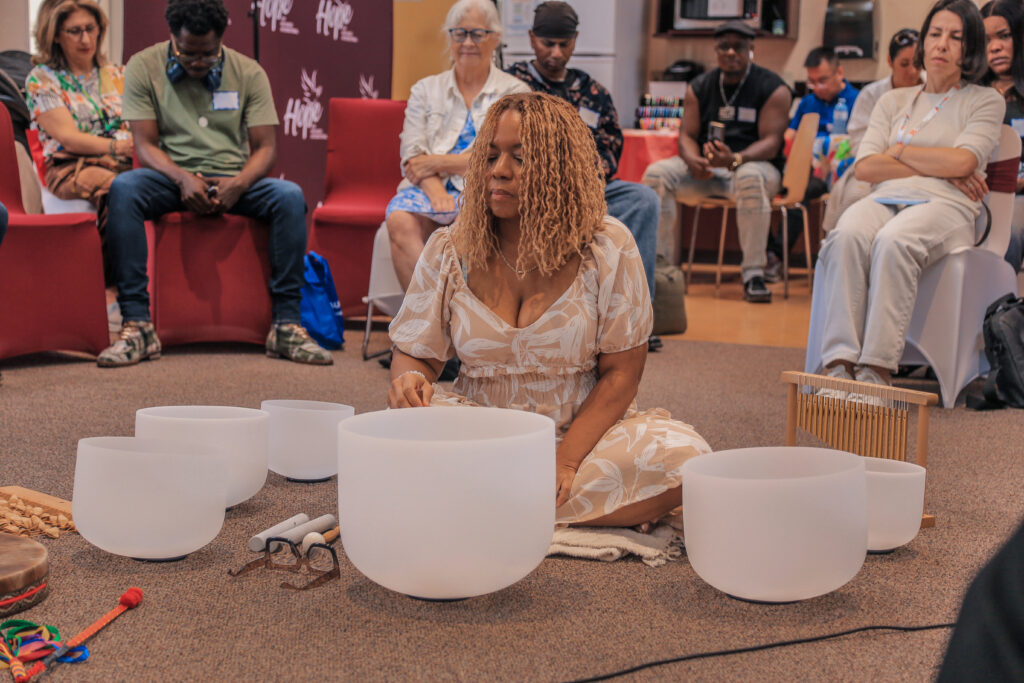
Participants were invited to slow down and experience culturally grounded, trauma-informed wellness and restorative activities, including a restorative sound experience, soothing music, storytelling and collective affirmations.
During the collective affirmation, participants reflected on belonging, dignity, identity, resilience and community, repeating words that captured the spirit of the gathering:
“I am here. I am present. I belong.”
And ultimately:
“I am because we are.”
The activities were not designed as clinical or therapeutic interventions. Instead, they created gentle opportunities for participants to rest, reconnect with themselves and experience wellness collectively.
For communities whose settlement experiences can involve uncertainty, isolation, discrimination and the pressures of rebuilding life in a new country, creating room for joy and rest is also part of creating room for belonging.
Sitting in a Circle and Having an Honest Conversation
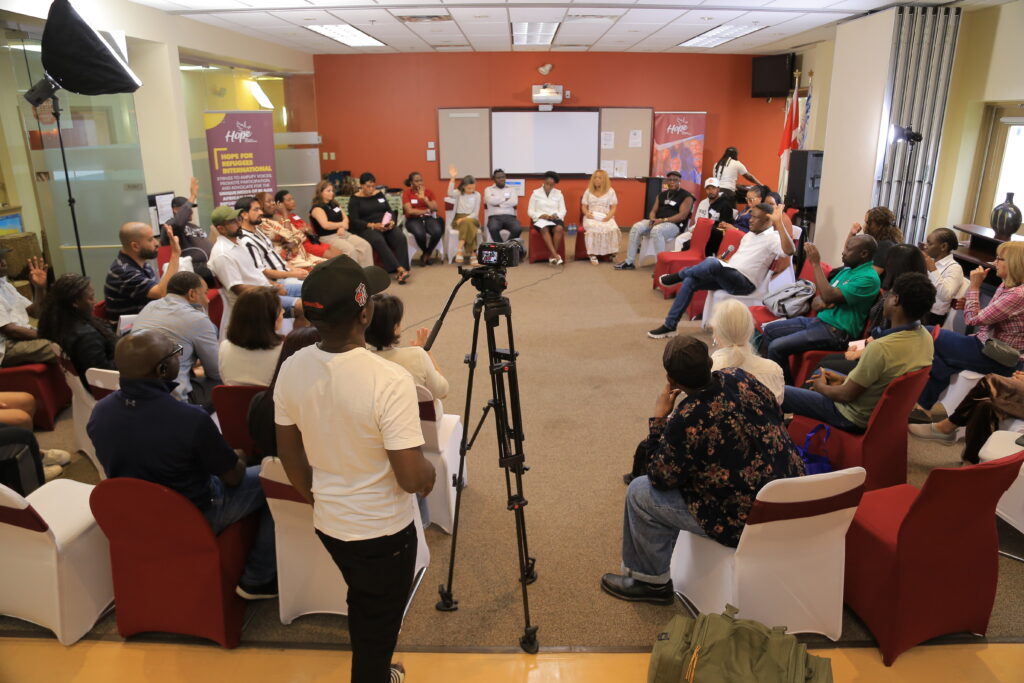
One of the most meaningful parts of the afternoon was the participatory Fireside Dialogue:
“Accessing Services, Navigating Systems Safely, and Building Trust Between Newcomer Communities and Service Providers.”
This was intentionally not designed as a traditional panel discussion.
There was no separation between a panel at the front of the room and an audience listening from a distance. Instead, newcomers, people with lived experience, settlement and social service providers and community stakeholders sat together in a large circle, facing one another.
That physical arrangement reflected the spirit of Ubuntu and helped create a more relaxed conversation in which institutional knowledge, frontline experience, community knowledge and lived experience could sit alongside one another.
The conversation explored how refugees, asylum seekers, immigrants and newcomers find and access services, the barriers they encounter when navigating unfamiliar systems, and what communities, institutions and service providers can do differently to strengthen trust, safety and inclusion.
Participants raised important concerns, including limited awareness of available services, difficulties navigating complex systems, mental health pressures, the shortage of culturally appropriate services, systemic anti-Black racism, housing insecurity and the high cost of living, and limited resources available to grassroots and community organizations supporting refugees and newcomers.
The discussion also challenged service providers and institutions to think about who gets to participate in designing services.
A strong message emerged from the circle:
Work with refugees and newcomers, not simply for them.
People with lived experience should not only be recipients of programs and services. Their knowledge, experiences and perspectives should help shape how programs are designed, implemented and evaluated.
Participants also emphasized the importance of stronger collaboration among governments, settlement agencies, grassroots organizations, community groups and newcomers themselves.
The dialogue did not attempt to solve every challenge in one hour. Instead, it created something equally important: a space to listen honestly, identify shared concerns and consider how relationships between communities and service systems can become stronger.
Connecting People Directly to Community Resources
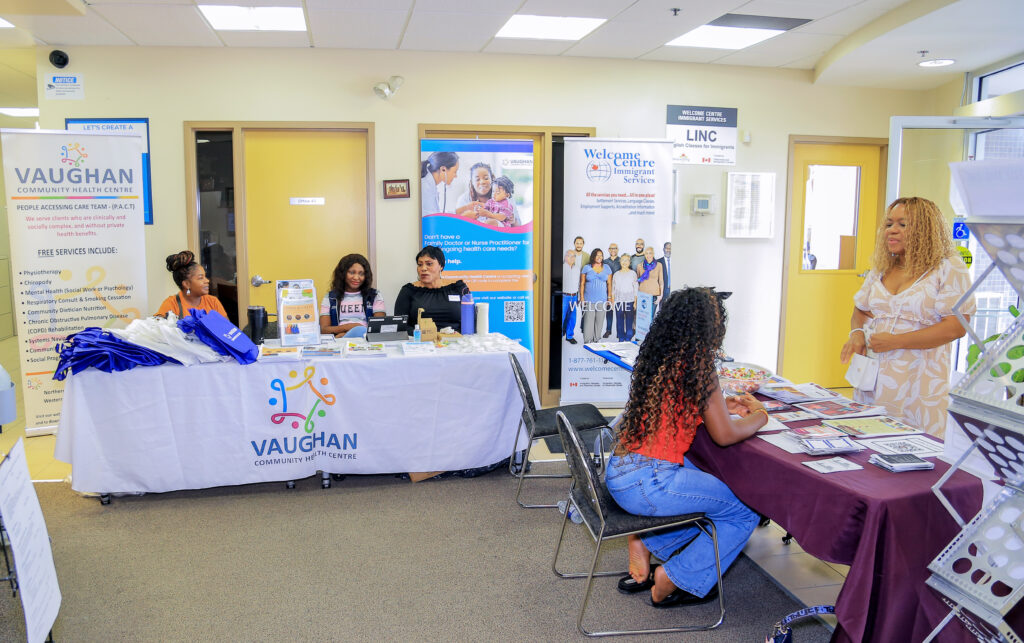
Those conversations were complemented by the Community Resource Hub, where participating organizations and service providers had opportunities to connect directly with community members.
Participants learned about available programs, asked questions, explored services and better understood where they could turn for support after the event.
This was an important part of the gathering because access to services is not simply about whether a service exists. People also need to know that it exists, understand whether they are eligible, know how to access it and feel comfortable approaching the organization providing it.
The Resource Hub helped turn information into human connection.
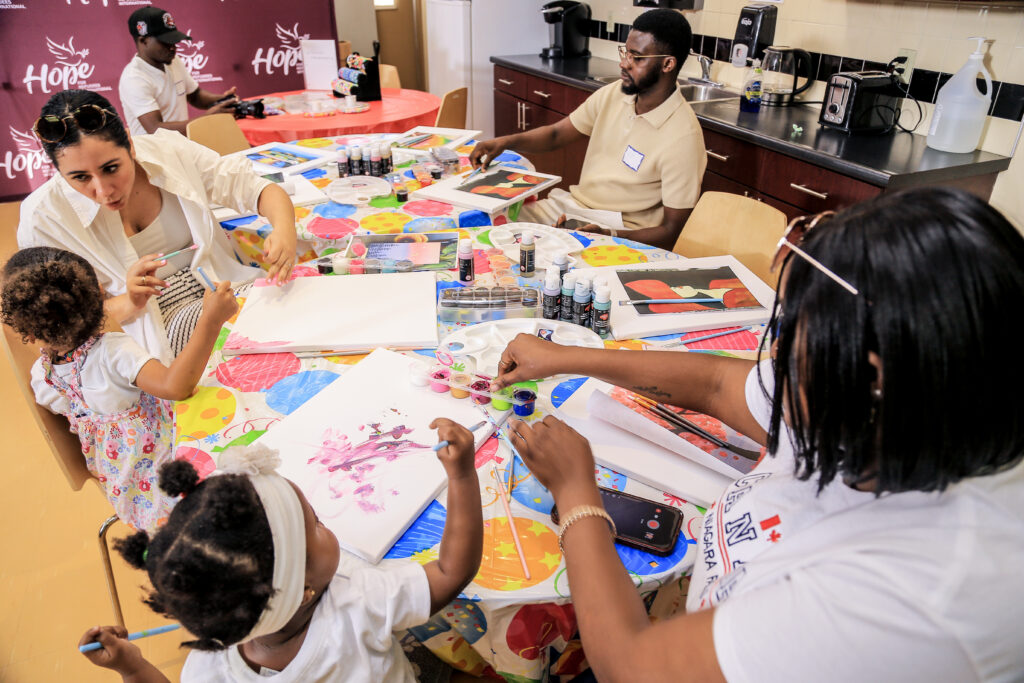
Interactive beadwork and painting activities were also integrated into the community space, creating an informal environment where people could talk, create and connect without every interaction needing to feel like a formal service appointment.
“Find Someone You Didn’t Know When You Arrived”
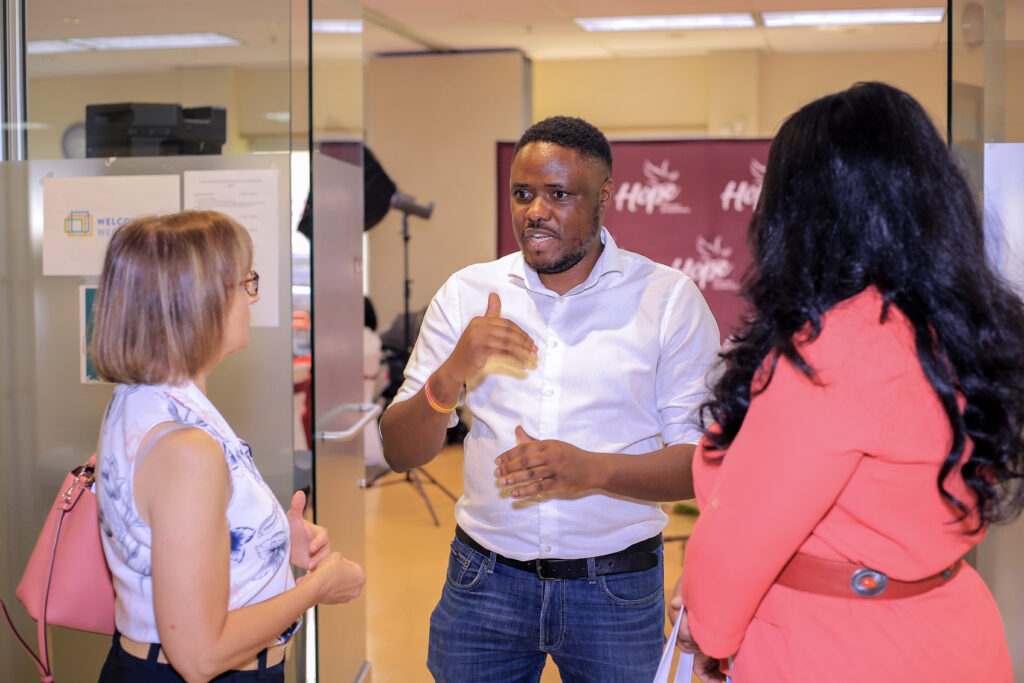
We also wanted to make sure networking was not something that appeared on the agenda but never actually happened.
Enter: Ubuntu Connection Bingo.
Participants received bingo cards with prompts encouraging them to move beyond the people they already knew, introduce themselves to someone new, discover something they had in common, learn something about another person and explore community resources.
The activity brought laughter and movement into the room while serving a serious purpose: breaking down the invisible barriers that often keep people within familiar social circles.
Participants met newcomers, local residents, volunteers, service providers and community members they might otherwise never have approached.
Sometimes community building begins with policy and programs.
And sometimes it begins with:
“Hi, what’s your name?”
Sharing Culture Around the Table
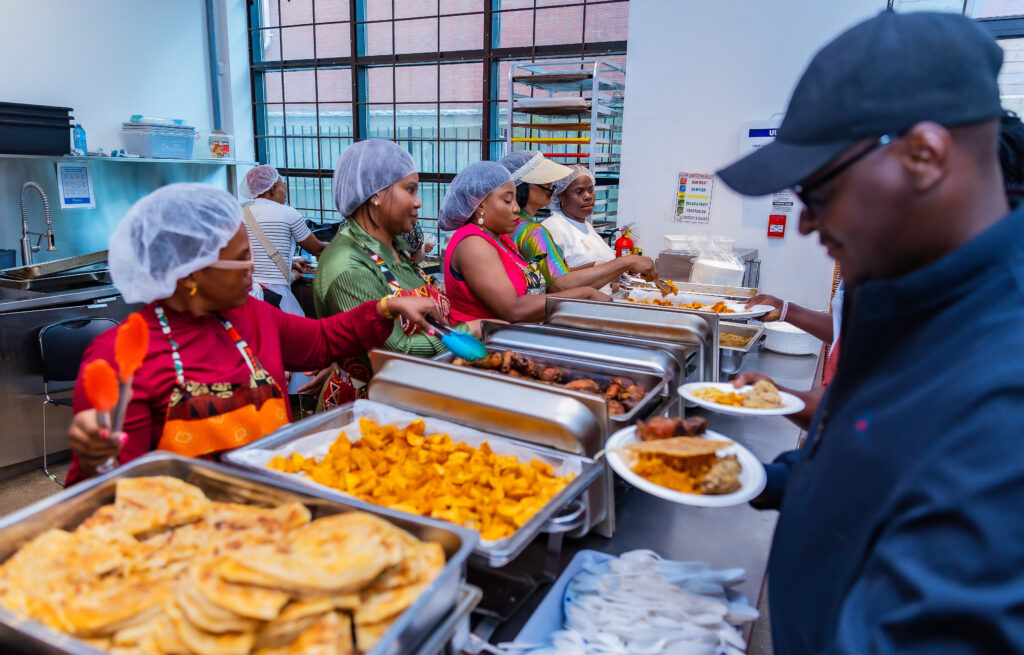
Food was another important part of the Ubuntu experience.
Participants enjoyed delicious African dishes prepared by Dishes by Temmy, with a culturally appropriate menu inspired by Yoruba cuisine.
The meal was more than catering at the end of an event.
Food carries memory, identity and culture. Sharing a meal created another opportunity for people to sit together, talk, experience something from another culture and simply enjoy one another’s company.
As music continued and people ate, networked, talked and danced, the formal program gradually gave way to something more organic: community.
Welcoming Week in Action
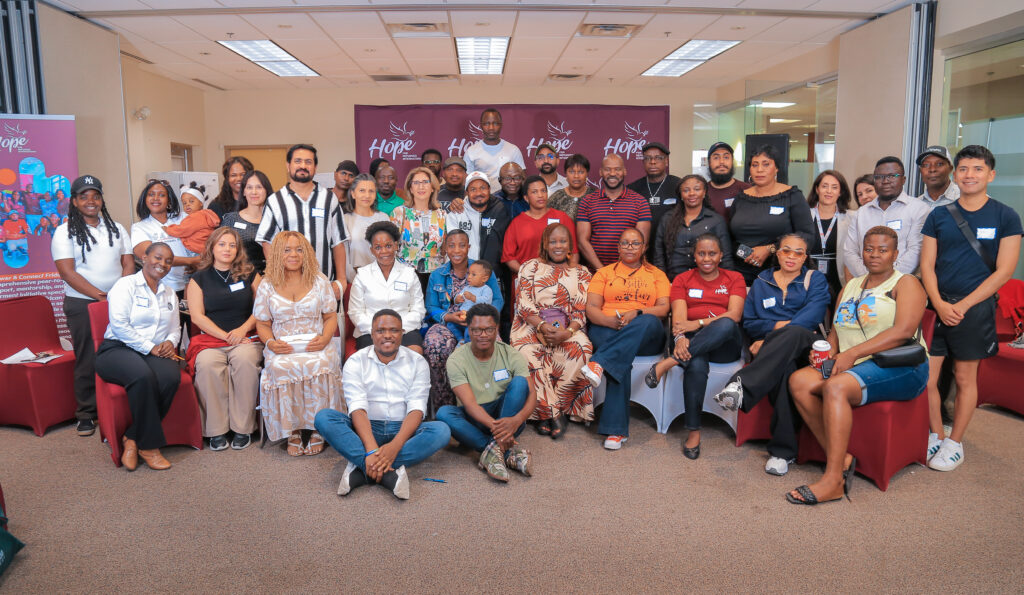
The Ubuntu Welcoming Circle was held in recognition of Welcoming Week 2026, but welcoming was not simply a theme printed on the event materials.
We wanted participants to experience what welcome can look and feel like.
It can look like someone saving you a seat.
It can sound like music from home.
It can mean discovering a service you did not know existed.
It can be a service provider listening instead of presenting.
It can be seeing your culture celebrated rather than explained.
It can be meeting someone whose story is completely different from yours and discovering what you have in common.
And it can be creating a community where newcomers are understood not simply as people who need help, but as neighbours, artists, workers, parents, leaders, volunteers, entrepreneurs, storytellers and community builders whose contributions make our communities stronger.
That is the kind of welcome we wanted to practice.
Thank You for Making the Circle Possible
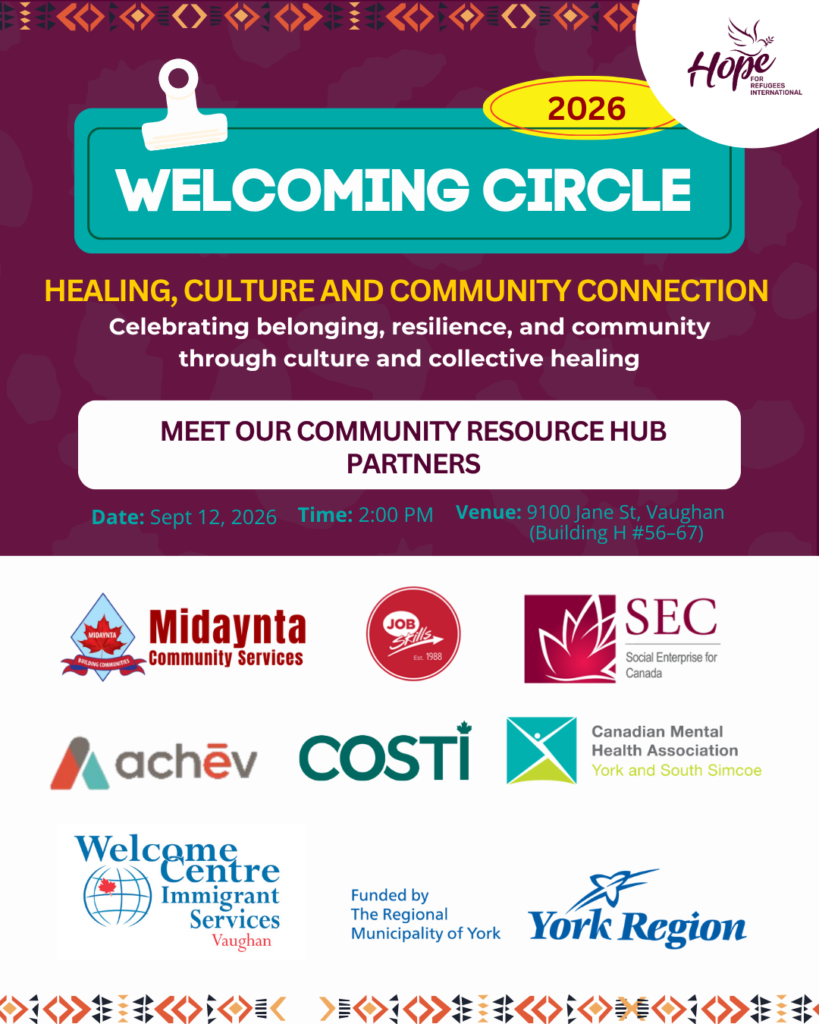
Hope for Refugees International extends our sincere gratitude to The Regional Municipality of York for supporting this Welcoming Week initiative and to the Vaughan Welcome Centre and the settlement, health, social service and community partners who helped make the gathering possible.
We are equally grateful to our speakers, facilitators, artists, performers, vendors, staff, peer leaders and volunteers who contributed their time, skills and energy.
And to every refugee, newcomer, local resident and community member who walked through the doors, joined the circle, asked a question, danced, painted, shared a meal, completed a bingo card, visited a resource table, listened to someone else’s experience or introduced themselves to someone new:
Thank you.
The success of the Ubuntu Welcoming Circle did not come from any single activity.
It came from people choosing to participate.
It came from people choosing to listen.
It came from people choosing to connect.
And that is Ubuntu.